


Category
|
Order Code |
Product Name |
|
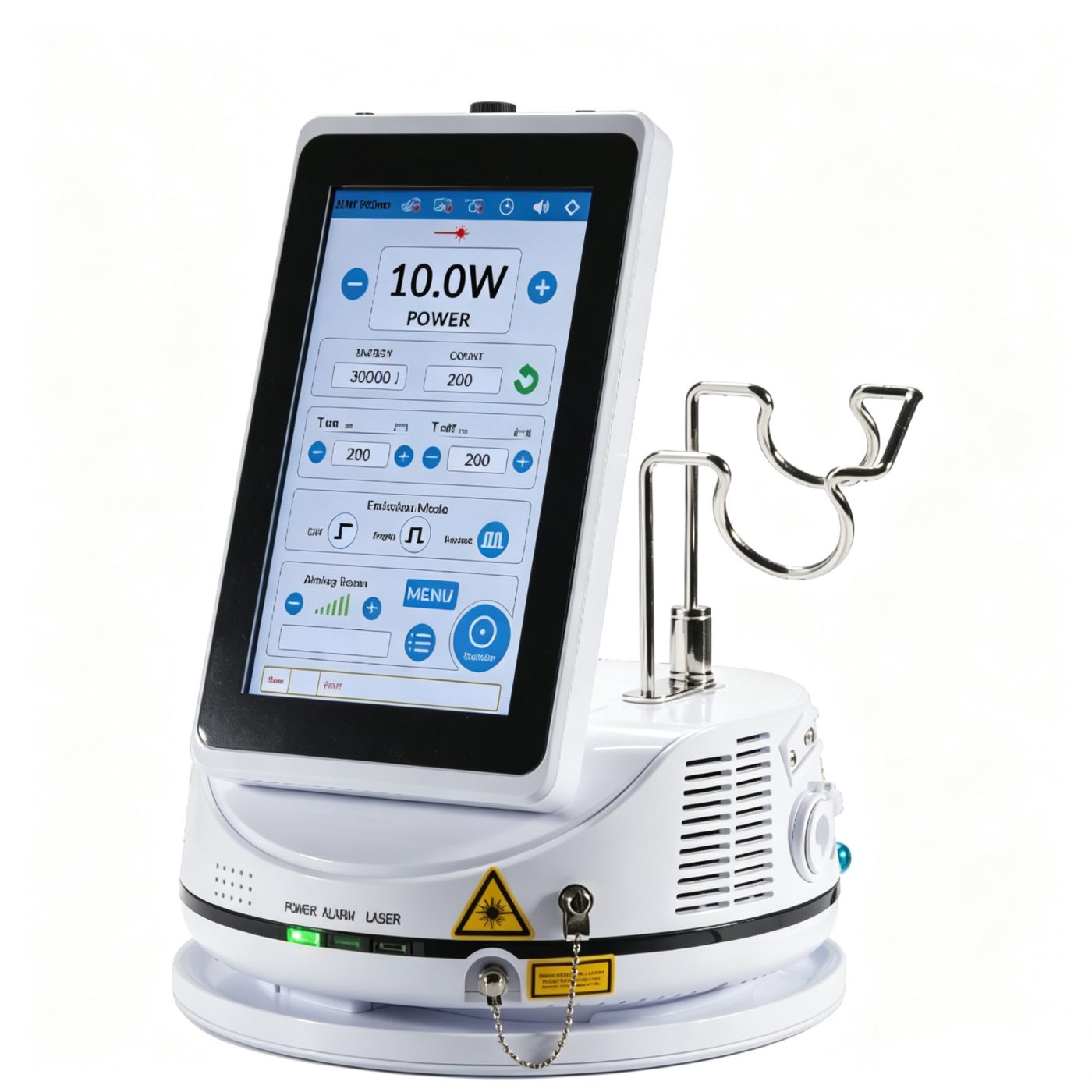
Veterinary Laser Therapy Instrument | Animal Rehabilitation Equipment | FKNMED |

FKNMED Veterinary Laser Therapy Instrument is a professional animal rehabilitation device designed for veterinary physical therapy and recovery applications. Equipped with a 980nm therapeutic laser wavelength and an auxiliary 650nm red diode laser, the instrument provides non-invasive laser therapy support for companion animals and livestock. With flexible operation modes and adjustable parameter settings, it offers stable output performance for veterinary hospitals, animal clinics, rehabilitation centers and professional animal healthcare institutions.
This veterinary laser therapy instrument is widely applied in animal treatment and recovery scenarios, including pet rehabilitation, veterinary physical therapy, postoperative recovery support, wound care assistance, pain management support and acupuncture auxiliary applications.
The equipment is suitable for veterinary hospitals, pet clinics, animal rehabilitation institutions, livestock breeding facilities and other professional animal healthcare environments. Its multifunctional design supports diversified veterinary rehabilitation workflows and provides an efficient solution for distributors, importers and veterinary equipment suppliers serving global animal healthcare markets.
Featuring a professional 980nm therapeutic laser combined with a 650nm red diode laser, the instrument provides targeted laser energy delivery for different animal rehabilitation applications. The dual wavelength configuration supports flexible veterinary physical therapy procedures and helps practitioners optimize treatment workflows according to different application requirements.
The veterinary laser therapy instrument provides a maximum power output of 10W and supports multiple operating modes, including CW, single pulse and repeat pulse. Adjustable pulse duration from 25us to 10s and repetition rate from 0.05Hz to 20KHz allow flexible parameter adjustment for different veterinary rehabilitation procedures.
By integrating multiple rehabilitation functions into one device, the instrument supports wound care assistance, postoperative recovery support, pain management applications and cartilage-related rehabilitation procedures. Flexible parameter switching helps simplify daily operation processes and improves workflow efficiency in veterinary clinics and animal rehabilitation facilities.
The equipment is designed for professional veterinary environments and can be integrated into existing animal healthcare workflows. Its practical operation modes and adjustable parameters support standardized use in pet hospitals, veterinary clinics, livestock facilities and rehabilitation institutions.
As a competitive veterinary rehabilitation equipment solution, FKNMED Veterinary Laser Therapy Instrument combines multifunctional application capability with stable operational performance. It helps veterinary institutions and distributors optimize equipment investment while supporting long-term animal healthcare service requirements.
| Item | Parameter |
|---|---|
| Wavelength | 980nm |
| Maximum Power | 10W |
| Operation Mode | CW, Single Or Repeat Pulse |
| Pulse Duration | 25us-10s |
| Repetition Rate | 0.05Hz-20KHz |
| Auxiliary Laser | 650nm Red Diode Laser |
FKNMED Veterinary Laser Therapy Instrument is developed for global veterinary equipment buyers, importers and distributors seeking reliable animal rehabilitation solutions. With stable supply capability, professional technical support and competitive B2B cooperation advantages, FKNMED helps partners provide practical veterinary rehabilitation equipment for clinics, hospitals and animal healthcare institutions worldwide.
Through professional product selection guidance and continuous service support, FKNMED supports international customers in establishing efficient veterinary rehabilitation workflows and expanding their animal healthcare product portfolio.
Q1. How to select a veterinary laser therapy instrument for animal hospitals?
Veterinary hospitals should select a laser therapy instrument based on clinical application requirements, patient types, treatment workflow, and operational needs. Key considerations include intended use in rehabilitation, pain management, wound care, or supportive therapy programs, as well as equipment usability, treatment control functions, and maintenance requirements. Procurement teams should evaluate whether the instrument can be integrated into existing veterinary workflows, including patient examination, treatment planning, repeated therapy sessions, and clinical record management. A suitable system should support consistent operation by veterinarians and technicians while meeting the facility’s long-term treatment demand.
Q2. Which veterinary conditions are suitable for therapeutic laser treatment?
Veterinary laser therapy instruments are commonly used as part of supportive treatment programs for conditions involving soft tissue recovery, musculoskeletal discomfort, wound management, and rehabilitation needs. Applications may include joint-related issues, muscle injuries, postoperative recovery support, and mobility improvement programs in small animals. Veterinarians should evaluate each patient based on clinical examination findings, treatment objectives, and overall health status before selecting laser therapy. The instrument is typically integrated with other veterinary approaches, such as physical rehabilitation, medication management, and follow-up evaluation.
Q3. How does veterinary laser therapy support postoperative recovery in dogs and cats?
Veterinary laser therapy can be incorporated into postoperative rehabilitation workflows to support tissue recovery and patient comfort management. After surgical procedures, veterinarians may use laser therapy as part of a comprehensive recovery plan that includes clinical assessment, monitoring of healing progress, and appropriate rehabilitation exercises. The application process should be adjusted according to the treatment area, patient condition, and veterinary evaluation. For animal hospitals, laser therapy equipment can provide an additional therapeutic option within structured postoperative care programs.
Q4. How should veterinarians select laser parameters for different animal tissues and treatment applications?
Veterinarians should determine laser treatment parameters according to the treatment objective, anatomical location, tissue characteristics, and patient response. Factors such as energy delivery, treatment duration, and application method should be selected based on professional clinical judgment and established treatment protocols. Incorrect parameter selection may reduce treatment effectiveness or cause unsuitable tissue exposure. Veterinary teams should combine equipment guidance with patient monitoring, including observation of skin response, comfort level, and treatment tolerance, to maintain safe and consistent therapy sessions.
Q5. What safety features should veterinary clinics evaluate before purchasing laser therapy equipment?
When purchasing veterinary laser therapy equipment, clinics should evaluate safety-related functions that support controlled operation and user protection. Important considerations include treatment parameter management, operator controls, equipment stability, and safety procedures for both animals and veterinary staff. Clinics should also establish appropriate operating protocols, including staff training, treatment area management, and equipment inspection procedures. A complete safety workflow helps ensure that laser therapy sessions are performed consistently during daily veterinary rehabilitation and clinical treatment activities.
Q6. Can veterinary laser therapy be integrated with physiotherapy and rehabilitation programs?
Yes, veterinary laser therapy can be integrated into broader rehabilitation workflows when clinically appropriate. Many veterinary rehabilitation programs combine different approaches, such as therapeutic exercise, manual techniques, hydrotherapy, and laser therapy, depending on patient requirements. Laser therapy equipment can support treatment planning by providing an additional modality during recovery management. Rehabilitation teams should coordinate treatment schedules, monitor patient response, and document progress through clinical observations, mobility assessment, and follow-up evaluations.
Q7. How should veterinary clinics establish a workflow for repeated laser therapy sessions?
A structured workflow helps veterinary clinics maintain consistent laser therapy operation for repeat treatments. A typical process includes patient examination, treatment area assessment, parameter selection, laser application, response monitoring, and clinical record documentation. Veterinary technicians should follow standardized procedures for equipment preparation, handpiece handling, and post-treatment cleaning. For rehabilitation departments managing multiple patients, organized scheduling and documentation can improve workflow efficiency while supporting continuous treatment management.
Q8. What maintenance is required for veterinary laser therapy instruments?
Regular maintenance is important for maintaining stable performance of veterinary laser therapy instruments. Routine procedures may include cleaning and disinfecting laser handpieces, checking cables and accessories, inspecting control functions, and following manufacturer-recommended maintenance schedules. Veterinary facilities should also monitor equipment condition to reduce interruptions during daily operation. Proper maintenance management supports reliable treatment availability and helps extend the operational lifespan of the equipment in veterinary hospitals, rehabilitation centers, and animal healthcare facilities.
Q9. How should veterinary staff document laser therapy treatments and clinical outcomes?
Veterinary facilities should maintain treatment records to support consistent patient management and long-term evaluation. Documentation may include patient information, treatment areas, selected parameters, session frequency, clinical observations, and follow-up assessments according to internal procedures. Accurate records help veterinary teams review treatment progress, adjust future therapy plans, and communicate within multidisciplinary care teams. For rehabilitation departments, standardized documentation also supports workflow management and continuous improvement of clinical operations.
Q10. Which specifications should procurement managers compare before purchasing veterinary laser therapy instruments?
Procurement managers should compare specifications based on clinical application requirements, facility workflow, and long-term operational needs. Key evaluation areas may include treatment functions, parameter adjustment capability, user operation requirements, maintenance needs, and compatibility with veterinary rehabilitation workflows. Buyers should also consider staff training requirements, expected patient volume, and service support arrangements. A comprehensive evaluation helps veterinary hospitals, rehabilitation centers, and distributors select equipment that fits practical clinical applications and supports stable daily operation.
Contact Information
E-mail:
Tel:
Address : Room 2512, Unit 1, Huaqiao Square, No.1, Daqiao North Road, Jiangbei New District, Nanjing, China
Veterinary Equipment
Medical Equipment

 There is currently no content to display


