


Category
|
Order Code |
Product Name |
|
Pet Laser Therapy Instrument | Veterinary Laser Surgery & Rehabilitation Device | FKNMED |

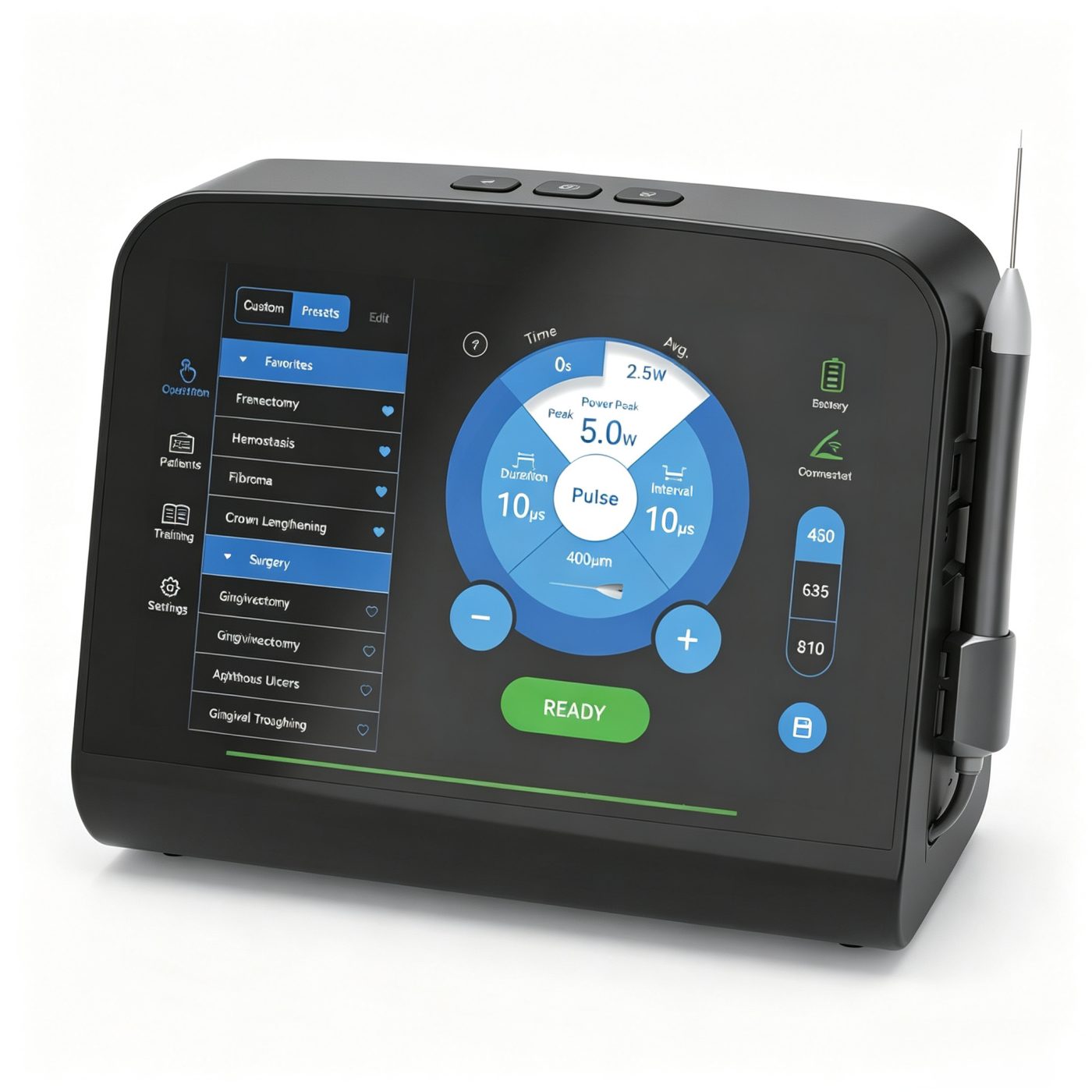
FKNMED Pet Laser Therapy Instrument is a multi-functional veterinary laser system designed for professional animal hospitals, veterinary clinics and rehabilitation institutions. Integrating multi-wavelength laser output and fiber-optic technology, the device supports veterinary laser surgery, minimally invasive procedures and physical rehabilitation applications. With optional wavelength configurations, precision fiber tips and adjustable pulse parameters, it provides stable laser output performance for daily veterinary clinical workflows, including surgical procedures, wound care support and animal rehabilitation management.
This pet laser therapy instrument is widely applied in veterinary treatment and recovery scenarios, including veterinary operating rooms, pet treatment centers, animal clinics and professional veterinary medical institutions. It supports laser surgery applications, fine dental procedures, body surface lesion treatment support, endoscopic minimally invasive procedures and physiotherapy applications.
Compatible with mainstream endoscopy equipment including gastroscopy, cystoscopy, colonoscopy and laparoscopy, the device supports minimally invasive intracavitary procedures, cutting and coagulation applications under endoscopic or ultrasound-assisted workflows. In rehabilitation applications, it is used for joint care, soft tissue injury management, fracture rehabilitation support, spinal and muscular condition management, otitis media care, dermatitis applications, eczema care and non-healing wound support.
The compact design and multifunctional configuration make it suitable for veterinary hospitals, pet clinics, breeding farms, animal healthcare institutions and global veterinary equipment distributors requiring professional laser-based solutions.
Equipped with flexible wavelength combinations and precision fiber tips ranging from 200μm to 400μm, the instrument provides targeted laser energy delivery for different veterinary surgical and rehabilitation applications. The adjustable configuration supports fine cutting, coagulation and various animal healthcare procedures according to specific workflow requirements.
The pet laser therapy instrument supports adjustable pulse duration from 10μs to 0.9s and pulse repetition rates up to 50kHz, ensuring consistent laser output during continuous veterinary operations. Multiple wavelength and power options allow adaptation to different surgical and physiotherapy applications.
The rechargeable lithium-ion battery supports flexible mobile operation and provides approximately one week of normal use under standard working conditions. The durable structure and portable design help veterinary institutions maintain efficient daily operation.
By combining laser surgery, minimally invasive intervention support and rehabilitation functions in one device, the instrument reduces the requirement for multiple independent equipment systems. Replaceable fiber tips and flexible parameter adjustment simplify equipment setup and improve workflow efficiency in veterinary clinics, operating rooms and rehabilitation areas.
The device supports integration with standard veterinary treatment workflows, including endoscopy systems, ultrasound-assisted procedures and routine animal healthcare applications. Its compact structure and 100-240V AC power input enable convenient deployment in different international veterinary environments.
Combining multiple laser application functions into one platform, FKNMED Pet Laser Therapy Instrument helps veterinary institutions optimize equipment investment and improve application flexibility. Stable operational performance, portable design and multifunctional capability make it suitable for long-term use by pet clinics, animal hospitals, breeding facilities and veterinary equipment distributors.
| Item | Parameter |
|---|---|
| Wavelength & Max Power | 635+980nm, 400mW+16W Optional 1: 450+635+980nm, 5W+400mW+12W pulse Optional 2: 450+635+810nm, 5W+400mW+9W pulse |
| Pulse Duration | 10μs-0.9s |
| Pulse Repetition Rate | Up to 50kHz |
| Tip Diameter | 200μm, 300μm, 400μm |
| Power Supply Input | 100-240V, AC, 50-80Hz |
| Battery Pack | Li-ion Rechargeable, lasts one week for normal use |
| Size / Weight | 214×150×149 mm, 1.6kg |
FKNMED Pet Laser Therapy Instrument is a professional multi-function veterinary laser solution developed for global B2B animal healthcare markets. With stable production capability, flexible supply support and professional technical service, FKNMED assists veterinary equipment importers, distributors and healthcare institutions in expanding their product portfolio.
The integrated laser surgery and rehabilitation functions, stable output performance and portable design provide practical value for veterinary hospitals, pet clinics and animal healthcare organizations. FKNMED supports global partners with standardized product guidance and after-sales technical assistance to build efficient veterinary treatment and rehabilitation workflows.
Q1. How to select a pet laser therapy instrument for dogs and cats?
Veterinary clinics should select a pet laser therapy instrument according to treatment objectives, patient types, clinical workflow, and long-term operational requirements. Key considerations include the intended applications, such as rehabilitation support, pain management, wound care, and postoperative recovery programs. Procurement teams should evaluate equipment usability, treatment control functions, maintenance requirements, and suitability for routine veterinary operations. A properly selected laser system should integrate into the clinic workflow, supporting patient examination, treatment planning, repeated therapy sessions, and clinical progress monitoring for dogs and cats.
Q2. Which companion animal conditions can benefit from therapeutic laser treatment?
Therapeutic laser treatment can be incorporated into veterinary care programs for companion animals with conditions involving soft tissue recovery, musculoskeletal discomfort, wound management, and rehabilitation needs. Common clinical applications may include support for arthritis management, postoperative recovery, mobility programs, and tissue repair processes. Veterinarians should evaluate each animal through clinical examination and determine whether laser therapy is appropriate as part of a comprehensive treatment plan. The instrument is generally used alongside other veterinary approaches, including medication, physical rehabilitation, and ongoing patient monitoring.
Q3. How does pet laser therapy support recovery after orthopedic and soft-tissue surgery?
Pet laser therapy can be used as a supportive modality within postoperative rehabilitation workflows after orthopedic and soft-tissue procedures. Veterinary teams may include laser treatment as part of a structured recovery program that combines clinical evaluation, mobility assessment, and appropriate rehabilitation exercises. Treatment planning should consider the surgical area, healing stage, patient condition, and veterinarian recommendations. For small animal hospitals, laser therapy equipment provides an additional option for managing recovery programs and supporting continuous postoperative care.
Q4. How should veterinary technicians adjust laser settings for different pet sizes and treatment areas?
Veterinary technicians should adjust laser treatment settings according to professional protocols, treatment objectives, anatomical location, and patient response. Factors such as animal size, tissue characteristics, and the depth of the target area may influence treatment decisions. Technicians should operate within veterinarian-approved guidelines and monitor patient tolerance throughout the session. Standardized operating procedures help maintain consistent therapy quality, reduce variation between treatments, and support efficient workflow management in veterinary rehabilitation and clinical environments.
Q5. What safety controls are essential for pet laser therapy equipment?
When evaluating pet laser therapy equipment, veterinary clinics should consider safety functions that support controlled treatment operation and protection for animals and staff. Important factors include reliable parameter management, operator controls, appropriate protective procedures, and staff training requirements. Clinics should establish clear workflows for treatment preparation, equipment handling, and patient monitoring. A comprehensive safety approach helps ensure that laser therapy sessions are performed consistently and responsibly during daily veterinary operations.
Q6. Can pet laser therapy be combined with rehabilitation programs such as massage, exercise, and hydrotherapy?
Yes, pet laser therapy can be integrated into broader small animal rehabilitation programs when clinically appropriate. Veterinary rehabilitation teams often combine multiple treatment methods according to individual patient needs, including therapeutic exercise, manual techniques, hydrotherapy, and laser therapy. Laser treatment can serve as one component within a structured rehabilitation workflow that includes examination, treatment planning, progress evaluation, and follow-up management. Proper coordination between different therapies helps clinics provide organized and continuous patient care.
Q7. How should clinics create standardized laser therapy protocols for technicians?
Veterinary clinics should develop standardized laser therapy protocols to ensure consistent operation among different technicians. A complete workflow may include patient assessment, treatment area preparation, parameter selection, equipment operation, patient monitoring, and treatment documentation. Clear procedures help technicians follow veterinary instructions, maintain equipment correctly, and record important treatment information. Standardization is particularly valuable for hospitals and rehabilitation units managing multiple patients and repeated therapy sessions.
Q8. How should clinics document laser treatment procedures and patient outcomes?
Veterinary clinics should maintain detailed treatment records to support ongoing patient management and evaluation of therapy progress. Documentation may include patient information, treatment areas, selected settings, session frequency, clinical observations, and follow-up assessments according to internal procedures. Accurate records allow veterinary teams to review treatment history, adjust future plans, and improve communication between veterinarians and technicians. For rehabilitation departments, standardized documentation also supports efficient workflow management and long-term treatment monitoring.
Q9. What maintenance is required for pet laser therapy instruments?
Regular maintenance is essential for maintaining stable performance of pet laser therapy instruments in veterinary facilities. Routine management may include cleaning and disinfecting laser handpieces, inspecting probes and cables, checking equipment functions, and following recommended maintenance procedures. Clinics should also monitor equipment condition to identify potential issues before they affect daily treatment schedules. Proper maintenance practices help reduce unexpected downtime and support reliable operation in veterinary hospitals, rehabilitation centers, and specialty animal care facilities.
Q10. Which technical specifications should procurement teams compare before purchasing pet laser therapy equipment?
Procurement teams should compare technical specifications based on clinical requirements, expected patient volume, workflow integration, and long-term operational needs. Important evaluation areas include treatment functions, parameter adjustment capability, user operation requirements, maintenance considerations, and suitability for companion animal applications. Buyers should also assess staff training requirements and equipment management needs. A structured comparison helps veterinary hospitals, rehabilitation units, and distributors select laser therapy instruments that align with practical clinical applications and continuous service requirements.
Contact Information
E-mail:
Tel:
Address : Room 2512, Unit 1, Huaqiao Square, No.1, Daqiao North Road, Jiangbei New District, Nanjing, China
Veterinary Equipment
Medical Equipment

 There is currently no content to display


