


Category
|
Order Code |
Product Name |
|
L-01-11-M18 |
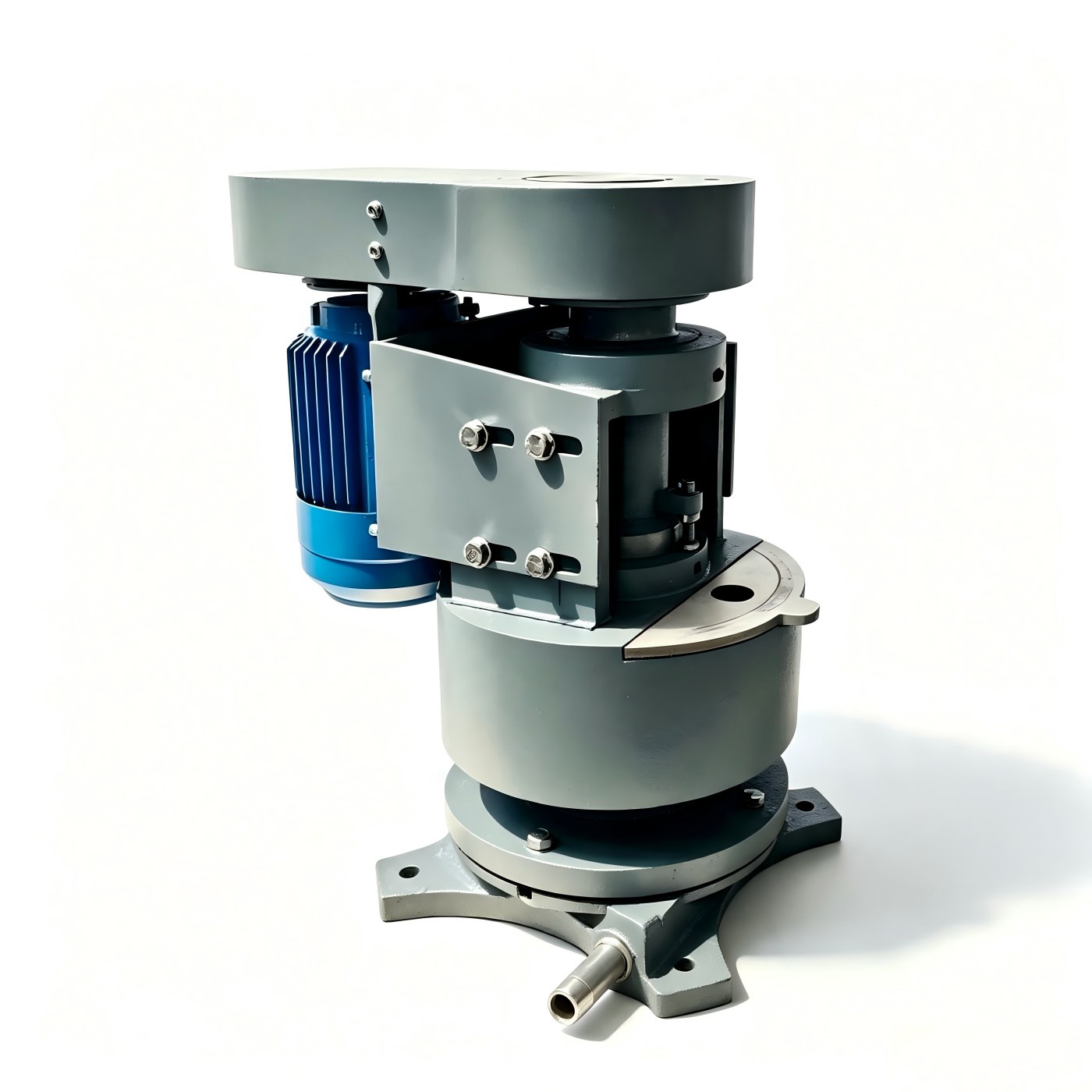
Laboratory Vertical Sand Pump for Mining Slurry Transportation and Mineral Testing |

The Laboratory Vertical Sand Pump is a professional vertical slurry conveying device developed for laboratory mineral processing and small-scale industrial slurry transportation. With a compact vertical shaft structure and reliable sealing design, it is specially designed for handling mineral pulp and tailings slurry in mining laboratories.
The equipment adopts a structural configuration consisting of a pump body, bearing seat and vertical spindle. Driven by a triangular belt motor system, the impeller rotates steadily inside the pump chamber to provide continuous slurry delivery. Bearing grease seals and a centrifugal anti-seepage wheel on the main shaft help prevent slurry penetration and liquid leakage during operation.
With multiple optional flow rate and delivery lift specifications, this vertical sand pump provides flexible slurry conveying solutions for mineral sample preparation, beneficiation testing, metallurgical laboratory workflows and industrial auxiliary material transportation.
The Laboratory Vertical Sand Pump supports common workflows in mining laboratories, metallurgical test centers and small-scale mineral processing test environments, covering slurry transportation requirements during sample preparation, mineral testing and beneficiation experiments.
During mineral sample preparation procedures, the equipment provides stable circulation and transportation of ore pulp and tailings slurry. Consistent slurry flow conditions support uniform material feeding for flotation, gravity separation and magnetic separation pre-treatment, helping maintain standardized sample conditions before testing.
The pump supports continuous slurry feeding during beneficiation condition experiments and mineral processing evaluations. Stable conveying performance reduces flow fluctuation interference and provides reliable operating conditions for comparative laboratory tests and process parameter verification.
Beyond mining laboratory applications, the equipment is suitable for slurry delivery in coal washing tests, high-temperature crystalline medium transportation for aluminum processing tests and cement-related slurry conveying applications.
Integrated vertical shaft and bearing seat structure provides compact installation, stable operation and reduced vibration during continuous slurry conveying.
Dual protection design with bearing grease seals and spindle centrifugal anti-seepage wheel effectively prevents slurry infiltration, liquid leakage and bearing damage.
Triangular belt transmission system ensures steady impeller rotation and uniform slurry delivery, maintaining consistent conveying conditions.
All models support a maximum pulp concentration of 35%, adapting to medium and high-concentration mineral slurry transportation requirements.
Multiple optional specifications with different discharge diameters, flow rates and delivery lifts provide flexible selection for laboratory and small-scale test applications.
Durable mechanical structure reduces maintenance requirements and supports frequent cyclic operation in professional mining laboratories.
| Parameter Item | Standard Model | Optional Specification 1 | Optional Specification 2 | Optional Specification 3 |
|---|---|---|---|---|
| Discharge Port Diameter | Φ13 mm | Φ19 mm | Φ25 mm | Φ38 mm |
| Delivery Lift | 5 m | 6 m | 9 m | 12 m |
| Flow Rate | 20–30 L/min | 55 L/min | 110 L/min | 250 L/min |
| Max Pulp Concentration | 35% | 35% | 35% | 35% |
| Motor Power | 0.75 kW | 1.1 kW | 2.2 kW / 3 kW | 3 kW |
| Rated Voltage | 380 V | 380 V | 380 V | 380 V |
| Overall Dimensions | 486×280×465 mm | 420×351×553 mm | 682×500×648 mm | 690×485×685 mm |
A complete range of optional specifications is available to meet different slurry transportation requirements. The standard model is suitable for routine laboratory beneficiation testing, while larger models with increased discharge diameter, higher delivery lift and greater flow capacity support large-volume slurry circulation and higher conveying requirements.
All optional models maintain the same anti-leakage structural design and 35% maximum pulp concentration capability, allowing users to select suitable configurations according to actual laboratory workflow and transportation conditions.
FKN PANDA Laboratory Vertical Sand Pump provides stable slurry conveying performance for mineral testing and beneficiation experiments. The reliable belt transmission system and anti-seepage structure help maintain consistent slurry conditions during repeated laboratory operations, supporting dependable experimental results.
The equipment delivers long-term operational reliability through professional bearing sealing and centrifugal anti-slurry protection. Its robust mechanical structure reduces wear risks and supports continuous cyclic operation in demanding laboratory environments.
With stable conveying capability and multiple specification options, the pump improves laboratory workflow efficiency by reducing interruptions and simplifying slurry transportation equipment selection for different test requirements.
Designed for mineral pulp and tailings slurry applications, the Laboratory Vertical Sand Pump integrates effectively into mineral sample preparation, beneficiation testing and small-scale processing workflows.
The durable structure and flexible model selection help reduce maintenance requirements and avoid unnecessary equipment investment, providing an economical slurry conveying solution for mining laboratories, research institutions and mineral processing test facilities.
Q1. How to select a laboratory mortar pump for slurry circulation in mineral processing test work?
Selecting a laboratory mortar pump requires consideration of slurry characteristics, circulation requirements, and the objectives of the mineral processing test program. Important factors include slurry density, particle size, viscosity, chemical properties, required flow stability, and whether the pump will be used for batch or continuous experiments. In mining laboratories, mortar pumps are commonly used to maintain slurry circulation during grinding, flotation, leaching, and other metallurgical evaluations. Proper selection helps create stable experimental conditions and supports reliable comparison of different ore processing parameters.
Q2. What factors should be considered when choosing a mortar pump for abrasive ore slurries?
When handling abrasive ore slurries, laboratories should evaluate wear resistance, material compatibility, slurry concentration, particle characteristics, and operating conditions. Mineral samples may contain hard particles that can accelerate wear during continuous circulation. A suitable mortar pump should provide stable slurry transfer while maintaining consistent flow during mineral testing workflows. Considering the relationship between pump design and slurry properties helps reduce operational interruptions and supports repeatable results during grinding tests, flotation studies, and hydrometallurgical experiments.
Q3. How does a mortar pump improve slurry homogeneity in continuous grinding tests?
A mortar pump supports continuous slurry circulation by maintaining movement of mineral pulp throughout the testing system. During grinding experiments, consistent slurry circulation can help reduce settling and improve the uniform distribution of solid particles within the test circuit. This allows laboratory engineers to evaluate grinding behavior and downstream processing performance under controlled conditions. By supporting stable material transfer, a mortar pump can contribute to more reliable metallurgical test results and better understanding of ore characteristics during laboratory-scale process evaluation.
Q4. Can a laboratory mortar pump handle slurries with high solids content in metallurgical experiments?
The suitability of a laboratory mortar pump for high solids slurry applications depends on pump configuration, material selection, slurry properties, and operating conditions. High solids content can affect flow behavior, wear rate, and pumping stability, so these factors should be evaluated before equipment selection. In metallurgical laboratories, understanding slurry characteristics is essential for selecting appropriate transfer equipment for grinding, flotation, and leaching studies. Proper matching between pump capability and experimental requirements helps maintain stable circulation during mineral processing research.
Q5. What are the differences between centrifugal and positive displacement mortar pumps for mining laboratories?
Centrifugal and positive displacement pumps operate differently and provide different advantages for laboratory slurry handling applications. Centrifugal pumps are generally associated with continuous flow circulation, while positive displacement designs may provide more controlled transfer under certain slurry conditions. For mining laboratory applications, selection depends on factors such as slurry viscosity, solids concentration, required flow stability, and experimental objectives. Engineers should evaluate the complete test circuit, including grinding, flotation, or leaching equipment, to determine the most suitable pumping approach.
Q6. How to ensure testing repeatability when using mortar pumps for slurry recirculation?
Testing repeatability depends on maintaining consistent slurry circulation conditions throughout each experimental cycle. Laboratories should control variables such as pump flow rate, slurry concentration, particle characteristics, and operating procedures. Regular monitoring of pump performance and inspection of wear components can help prevent flow variations that may influence test results. In mineral processing studies, stable slurry recirculation supports accurate evaluation of process parameters and improves confidence when comparing different ore samples or treatment methods.
Q7. What maintenance requirements are typical for mortar pumps in continuous hydrometallurgy testing?
Maintenance requirements for laboratory mortar pumps typically include inspection of wear components, monitoring of flow performance, and checking compatibility between pump materials and process solutions. In hydrometallurgical testing, exposure to chemical solutions and abrasive solids may influence component service life. Routine maintenance helps identify potential issues before they affect experimental conditions. Establishing appropriate inspection procedures supports continuous laboratory operation and reduces unexpected interruptions during long-term leaching or process evaluation programs.
Q8. How does impeller wear affect pump performance in abrasive slurry applications?
Impeller wear can influence pumping efficiency, flow stability, and slurry circulation performance during abrasive applications. Mineral processing samples often contain hard particles that may gradually affect internal components during repeated operation. Changes in pump performance can impact experimental conditions, particularly in continuous grinding or flotation test circuits where stable circulation is required. Regular inspection of wear conditions and timely maintenance help laboratories maintain consistent operating parameters and improve the reliability of metallurgical testing results.
Q9. Can mortar pumps be integrated with density meters for real-time slurry concentration control?
Mortar pumps can be incorporated into laboratory process systems where compatible monitoring and control equipment are available. Integration with density measurement devices may allow operators to monitor slurry conditions and adjust process parameters during mineral processing experiments. Such configurations can support improved control of grinding, flotation, and leaching test circuits by providing more consistent operating conditions. When designing an automated laboratory workflow, engineers should consider pump control methods, sensor compatibility, and the overall requirements of the testing system.
Q10. How to scale mortar pump parameters from laboratory to industrial mineral processing operations?
Scaling mortar pump parameters from laboratory testing to industrial applications requires evaluation of slurry behavior, flow requirements, equipment configuration, and process conditions. Laboratory experiments provide important information about material handling characteristics, but scale-up should consider differences in operating volume, residence time, and system design. Recording key pump parameters during laboratory mineral processing tests helps support future pilot-scale evaluation and process development. Proper documentation improves the connection between laboratory findings and larger-scale mineral processing decisions.
Contact Information
E-mail:
Tel:
Address : Room 2512, Unit 1, Huaqiao Square, No.1, Daqiao North Road, Jiangbei New District, Nanjing, China
Veterinary Equipment
Medical Equipment

 There is currently no content to display


