


Category
|
Order Code |
Product Name |
|
A-03-08-M01 |
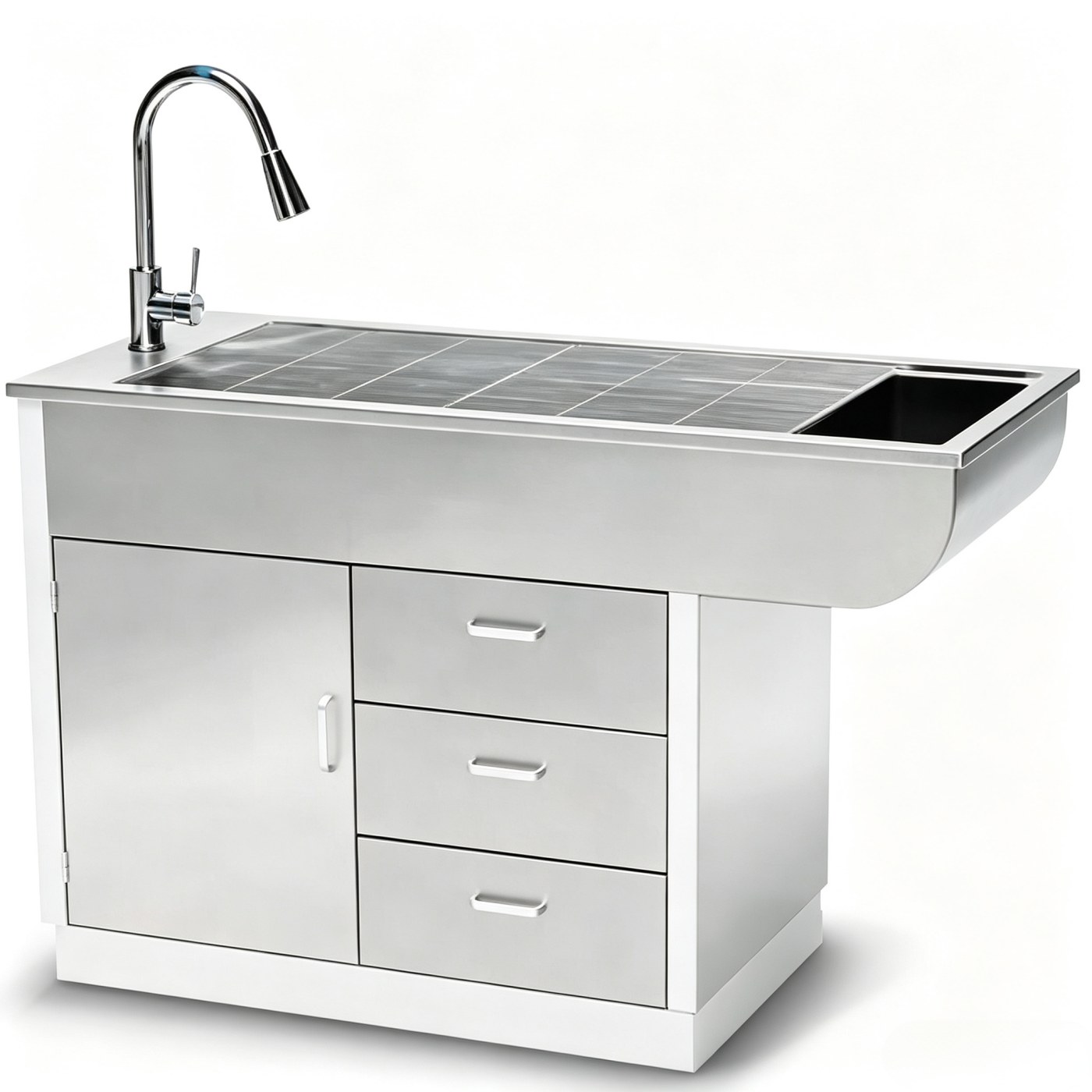
Stainless Steel Veterinary Preparation & Grooming Sink Cabinet | FKNMED |

This Stainless Steel Veterinary Preparation & Grooming Sink Cabinet is a professional fixed sanitary workstation designed specifically for standardized veterinary clinics, animal hospitals and veterinary laboratories. As a practical and cost-effective alternative to imported veterinary sanitary equipment, the unit adopts full stainless steel construction to provide durability, stain resistance and convenient daily sanitization.
Featuring an integrated sink and cabinet storage structure, this workstation centralizes preoperative preparation, instrument cleaning, routine disinfection and pet grooming cleaning procedures. Designed for veterinary facility workflows, it provides clean, organized and stable working conditions for daily veterinary diagnosis, treatment support and sample processing operations.
This veterinary preparation and grooming sink cabinet supports multiple veterinary medical and laboratory scenarios. It serves as a dedicated cleaning and preparation station in Veterinary Operating Room, Pet Operating Room and Animal Operating Room for surgical instrument cleaning, preoperative preparation and sterile material arrangement.
The workstation supports daily workflows of Veterinary Exam Diagnostics, Pet Exam Diagnostics and Animal Exam Diagnostics, assisting sanitary processing during Veterinary POCT, Pet POCT, Animal POCT, Veterinary IVD, Pet IVD and Animal IVD specimen pretreatment and epidemic screening procedures.
It is also suitable for Veterinary Treatment & Recovery, Pet Treatment & Recovery and Animal Treatment & Recovery areas, while providing cleaning support for Veterinary Dental Care, Pet Dental Care, Animal Dental Care, Veterinary Ophthalmic Care, Pet Ophthalmic Care, Animal Ophthalmic Care and Pet Grooming operations.
Suitable for pet clinics, animal hospitals, veterinary laboratories, third-party animal detection institutions and large-scale livestock farms, this veterinary equipment meets daily sanitary operation requirements and bulk procurement demands from global veterinary equipment importers and distributors.
The seamless stainless steel surface reduces dirt accumulation and residual contaminants during specimen pretreatment and instrument cleaning procedures. The integrated sink and storage design helps maintain organized cleaning conditions for veterinary testing workflows.
Standardized cleaning and storage processes support stable preparation conditions for Veterinary IVD and POCT-related operations, helping reduce contamination risks during animal epidemic screening, drug sensitivity testing and pathological analysis procedures.
Constructed with full stainless steel material, the sink cabinet provides rust resistance, corrosion resistance and deformation resistance for long-term veterinary clinical use. It adapts to repeated disinfection, detergent cleaning and frequent daily operation environments.
The integrated cabinet structure delivers stable performance with reduced maintenance requirements and no routine consumable components. It supports continuous operation in overseas veterinary clinics and professional veterinary laboratories following standardized hygiene management procedures.
The integrated sink and cabinet structure combines cleaning, disinfection and tool storage functions within one workstation, simplifying daily operation procedures and reducing unnecessary material movement.
Centralized pretreatment and sanitization improve instrument turnover efficiency between cases. The easy-to-clean stainless steel surface reduces routine maintenance workload and supports efficient operation in veterinary institutions with frequent daily diagnostic and testing activities.
The standardized size and functional layout are designed for veterinary clinical hygiene requirements and laboratory management workflows. The workstation is compatible with veterinary cleaning tools, sterile instrument management systems and POCT/IVD testing workflows.
Its fixed workstation structure integrates smoothly into Veterinary Radiology Room, Pet Radiology Room, Animal Radiology Room, dental rooms and grooming areas, supporting existing veterinary diagnosis, treatment and laboratory environments.
The durable stainless steel structure provides long service life and reduces equipment replacement requirements. The low-maintenance design helps control long-term operating expenses by reducing repair frequency and routine consumable costs.
As a cost-effective alternative to imported veterinary sanitary cabinets, this product helps veterinary medical institutions, livestock farms and cross-border distributors optimize procurement investment while maintaining standardized hygiene management.
| Specification | Details |
|---|---|
| Product Type | Stainless Steel Veterinary Preparation & Grooming Sink Cabinet |
| Overall Dimension | 1400mm (Length) × 600mm (Width) × 850mm (Height) |
| Main Material | Full stainless steel |
| Functional Structure | Integrated sink and storage cabinet design |
FKNMED Stainless Steel Veterinary Preparation & Grooming Sink Cabinets are professionally developed for veterinary hygiene management, clinical preparation and laboratory operation scenarios. The products support standardized workflows in veterinary clinics, animal hospitals and professional veterinary facilities.
With stable mass production capability and continuous bulk supply capacity, FKNMED supports long-term cooperation with global veterinary equipment importers, distributors and animal healthcare institutions. Combining durable stainless steel construction, integrated cleaning functions and practical workstation design, this product provides a reliable alternative solution for veterinary sanitary management and daily operation optimization.
Q1. Which veterinary preparation and grooming workflows require a stainless steel sink cabinet?
A stainless steel veterinary preparation and grooming sink cabinet is designed for professional animal care environments requiring efficient washing, preparation, and cleaning workflows. It can support activities such as animal bathing, preoperative patient cleansing, grooming preparation, wound cleaning preparation, and routine treatment-area organization. Veterinary clinics should evaluate the sink based on animal types, daily workflow volume, available space, and hygiene requirements. For procurement decisions, the cabinet design, storage capacity, drainage system, and compatibility with clinical operations are important factors for long-term use.
Q2. How can veterinary clinics use this sink for animal bathing and preoperative preparation?
The sink cabinet can help veterinary teams organize animal preparation procedures by providing a dedicated area for washing and cleansing activities before examination or treatment. In clinical workflows, proper patient preparation may support subsequent steps such as physical examination, diagnostic evaluation, or surgical preparation. Veterinary facilities should consider animal size, handling requirements, water management, and staff accessibility when selecting a suitable configuration. A well-planned preparation area can improve workflow efficiency and maintain better organization between grooming, treatment, and examination spaces.
Q3. What animal sizes can be safely handled in a veterinary grooming sink?
The suitable animal size depends on the sink dimensions, basin structure, working height, and facility handling requirements. Veterinary clinics should evaluate the common animal species they serve, including small companion animals and other applicable patients, before selecting equipment. Important considerations include available working space, animal mobility, staff handling procedures, and safe restraint methods. Proper equipment selection helps veterinary teams perform washing, preparation, and related procedures more efficiently while maintaining safe operation for both animals and staff.
Q4. Which stainless steel properties support infection control in veterinary preparation areas?
Stainless steel is commonly selected for veterinary preparation areas because it provides a durable surface suitable for regular cleaning and disinfection procedures. Veterinary facilities should evaluate surface smoothness, resistance to moisture exposure, structural durability, and compatibility with routine cleaning practices. In high-use environments, easy-to-maintain materials can support hygiene management by allowing staff to clean preparation areas effectively between patients. Material selection should be considered together with workflow design, drainage performance, and daily maintenance requirements.
Q5. How does integrated cabinet storage improve organization of grooming and preparation supplies?
Integrated cabinet storage helps veterinary teams organize frequently used supplies such as grooming tools, preparation materials, and cleaning accessories within the working area. A well-organized storage system can reduce unnecessary movement during animal preparation procedures and improve operational efficiency. Clinics should consider whether the cabinet layout supports separation of clean supplies, used items, and routine consumables. Effective organization contributes to smoother workflows from patient preparation through examination, treatment, and post-procedure cleaning activities.
Q6. What drainage design prevents standing water and contamination after animal washing?
An effective drainage system is an important consideration for veterinary sinks used in washing and preparation workflows. Proper drainage helps reduce water accumulation, supports cleaning efficiency, and assists staff in maintaining a hygienic preparation environment. Veterinary facilities should evaluate drain accessibility, plumbing requirements, and compatibility with the installation location before procurement. Regular cleaning and maintenance of drainage components are also necessary to help prevent blockages and maintain reliable daily operation in grooming and treatment areas.
Q7. How can veterinary clinics reduce cross-contamination around shared grooming sinks?
Reducing cross-contamination requires appropriate cleaning procedures, workflow management, and separation of supplies within the preparation area. Veterinary teams should clean and disinfect sink surfaces, handles, and related working areas according to facility hygiene practices after each patient use. Organizing clean and used materials separately can also improve preparation efficiency. Equipment placement, staff procedures, and regular maintenance all contribute to maintaining a controlled environment for animal bathing, preparation, and treatment-related activities.
Q8. Can the sink cabinet support wound cleaning and minor treatment preparation procedures?
A stainless steel preparation sink cabinet may support workflows involving animal cleansing, wound cleaning preparation, and other routine treatment-area activities when the configuration meets facility requirements. Veterinary teams should evaluate the specific clinical application, cleaning procedures, and operational environment before use. The sink should be integrated into an organized workflow that includes animal examination, clinical evaluation, and follow-up care. Proper hygiene management and staff handling procedures remain essential for maintaining an efficient veterinary preparation area.
Q9. How should veterinary technicians clean and disinfect the sink after each patient?
Veterinary technicians should follow established facility cleaning procedures to remove biological materials, hair, debris, and residues from sink surfaces after patient use. Cleaning attention should include the basin, faucet areas, cabinet surfaces, and drainage components where applicable. The selected cleaning methods should be compatible with stainless steel surfaces and the clinic’s hygiene requirements. Consistent maintenance routines help preserve equipment condition, support infection-control practices, and maintain reliable operation in busy veterinary preparation environments.
Q10. Which specifications should distributors assess when supplying veterinary grooming facilities?
Distributors should evaluate specifications according to the needs of veterinary clinics, grooming facilities, and animal healthcare users. Important factors include sink dimensions, stainless steel construction, cabinet configuration, drainage design, installation requirements, and workflow compatibility. Understanding customer applications helps distributors recommend suitable solutions for different facility types, from companion animal clinics to larger animal care environments. A professional evaluation should consider both daily operational needs and long-term maintenance requirements to support reliable equipment utilization.
Contact Information
E-mail:
Tel:
Address : Room 2512, Unit 1, Huaqiao Square, No.1, Daqiao North Road, Jiangbei New District, Nanjing, China
Veterinary Equipment
Medical Equipment

 There is currently no content to display


