


Category

|
Order Code |
Product Name |
|
L-04-03-M01 |
200mm Stainless Steel Standard Test Sieve for Mining Laboratory Sample Preparation |
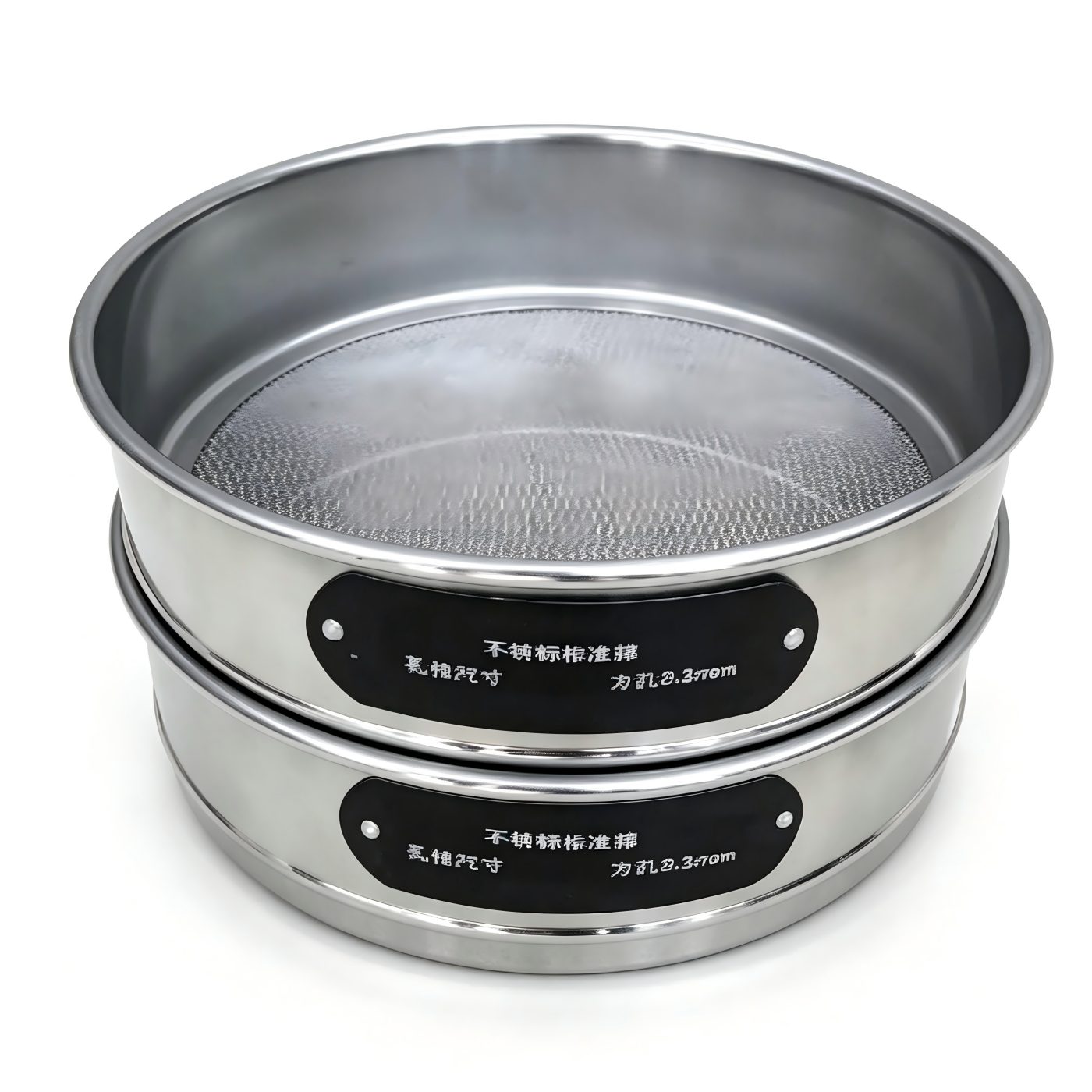
This double-layer stainless steel standard test sieve is a core particle size classification tool designed for mining laboratory sample preparation and metallurgical testing workflows. Engineered for accurate separation of ore, mineral concentrate, tailings and metallurgical raw materials, it adopts a standard 200×50mm structure with precision mesh apertures ranging from 0.045mm to 6mm.
Manufactured with premium stainless steel, this laboratory sieve provides reliable structural stability, corrosion resistance and long-term operational durability in demanding testing environments. As an essential tool for mineral sample preparation, it helps achieve consistent particle size grading before further grinding, analysis and metallurgical evaluation, improving test repeatability and sample consistency.
This stainless steel standard test sieve is widely applied in mining laboratories, metallurgical testing facilities, hydrometallurgy laboratories and mineral quality inspection workflows.
The sieve enables accurate particle size classification of crushed ore, coal samples, mineral concentrates and tailings. Standardized screening before grinding, leaching and analytical testing helps establish consistent sample conditions for subsequent laboratory procedures.
Precise aperture selection supports particle size distribution analysis of mineral samples. Consistent grading results provide reliable supporting data for mineral characterization, ore evaluation and mineral processing studies.
The standard sieve provides particle-size-controlled samples for pyrometallurgical and hydrometallurgical experiments. Uniform sample fineness helps improve testing consistency and reduces variation caused by uneven particle distribution.
Suitable for routine particle size inspection of processed ores and mineral products, supporting quality monitoring activities in mining enterprises and mineral processing operations.
High Testing Accuracy with Standard Aperture: Precision apertures from 0.045mm to 6mm enable reliable particle classification. Uniform mesh specifications support consistent screening performance for mineral testing and laboratory analysis.
Excellent Operational Reliability: Full stainless steel construction and double-layer reinforced structure provide corrosion resistance, oxidation resistance and stable mechanical performance during repeated screening operations.
Improved Laboratory Efficiency: The standard 200×50mm dimension matches common laboratory screening procedures, supporting efficient batch sample preparation and streamlined mineral testing workflows.
Broad Workflow Compatibility: Designed for conventional mining laboratory processes, the sieve integrates easily with mineral preparation, particle size analysis and metallurgical testing procedures.
Cost-Effective Laboratory Tool: Durable stainless steel construction extends service life and reduces replacement frequency, helping laboratories maintain stable screening performance with lower operating costs.
| Product Name | Sample Preparation Standard Sieve |
| Overall Dimension | Dia.200×50mm |
| Aperture Size Range | 6mm - 0.045mm |
| Main Material | Stainless Steel |
| Structure | Double-layer Standard Structure |
FKN PANDA provides standardized laboratory testing tools and supporting equipment for global mining, mineral processing and hydrometallurgy applications. Our stainless steel standard test sieve is developed around practical laboratory requirements including screening consistency, structural stability and workflow compatibility.
The standardized manufacturing process ensures reliable aperture performance and durable stainless steel construction for routine mineral sample preparation and particle size detection. It supports consistent testing conditions for mining laboratories, quality inspection institutions and metallurgical research facilities.
By combining practical design with stable supply capability, FKN PANDA helps customers optimize laboratory tool management, improve testing efficiency and reduce operational costs. The product is suitable for long-term cooperation with mining enterprises, laboratories and distributors requiring dependable mineral testing solutions.
Q1. How to select appropriate mesh sizes for double-layer stainless steel test sieves in mineral particle size analysis?
Selecting suitable mesh sizes depends on the target particle size range, ore characteristics, and the requirements of the mineral testing workflow. In mining laboratories, sieve selection is typically based on whether the analysis supports ore sample preparation, mineral processing evaluation, or metallurgical testing. A properly configured sieve set allows technicians to classify samples consistently and obtain reliable particle size distribution data. Factors such as feed material hardness, expected particle range, and testing objectives should be considered when selecting sieve combinations for exploration, process development, or routine quality control applications.
Q2. What factors should be considered when choosing stainless steel test sieves for mining laboratory applications?
When choosing stainless steel test sieves, laboratories should evaluate factors including mesh accuracy, frame durability, material compatibility, and suitability for the intended testing process. Mineral laboratories often handle abrasive ore samples, requiring sieve systems that can maintain structural integrity during repeated use. Stainless steel construction is commonly selected for its resistance to corrosion and suitability for various mineral analysis environments. The selected sieve specification should match laboratory equipment, sample characteristics, and workflow requirements to support consistent particle classification during mineral processing research and routine analysis.
Q3. Can double-layer sieve construction improve particle size distribution accuracy in mineral processing test work?
Double-layer sieve construction can support more stable sample retention and handling during particle size classification procedures. In mineral processing laboratories, accurate particle size distribution analysis depends on minimizing sample loss and maintaining consistent separation conditions throughout sieving. A double-layer design may provide additional structural support compared with conventional single-layer configurations, particularly during repeated testing of abrasive mineral samples. However, overall analysis accuracy also depends on proper mesh selection, sample preparation procedures, operator technique, and compliance with laboratory testing practices.
Q4. How does stainless steel sieve material affect sample contamination levels in sensitive mineral analysis?
The sieve material can influence sample integrity during particle size analysis, especially in contamination-sensitive mineral testing applications. Stainless steel is widely used in mining laboratories because it provides mechanical durability and corrosion resistance under normal laboratory conditions. For applications involving trace element analysis or sensitive metallurgical evaluation, laboratories should consider the compatibility between sieve material and sample requirements. Proper cleaning procedures between batches are also important to reduce cross-contamination risks and maintain reliable results throughout mineral analysis workflows.
Q5. How to configure sieve stack systems for comprehensive particle size classification in mineral processing?
A sieve stack system should be configured according to the particle size range being evaluated and the objectives of the mineral processing test work. Mining laboratories typically arrange sieves from larger to smaller apertures to separate different size fractions efficiently. The configuration may vary depending on ore type, crushing or grinding conditions, and downstream testing requirements. A suitable sieve stack helps technicians evaluate grinding performance, understand particle distribution, and support process decisions during mineral processing studies and metallurgical evaluations.
Q6. What are the differences between single-layer and double-layer stainless steel sieves for different ore characteristics?
Single-layer and double-layer stainless steel sieves differ mainly in structural design and sample retention characteristics. Double-layer configurations may provide additional support for laboratory environments where frequent sieving of abrasive or high-volume mineral samples is required. Single-layer sieves can be suitable for general particle size analysis applications where standard handling conditions are sufficient. The appropriate choice depends on ore hardness, testing frequency, sample volume, and laboratory workflow requirements. Selection should focus on achieving reliable classification performance while maintaining operational efficiency.
Q7. How do precision aperture sizes in stainless steel sieves improve particle size analysis accuracy in mineral testing?
Precision aperture sizes are important for obtaining consistent particle size classification results in mineral testing workflows. During ore sample preparation and processing evaluation, accurate separation of particle fractions helps laboratories assess grinding performance and material characteristics. Sieve aperture consistency reduces variation between tests and supports repeatable analysis procedures. For mining laboratories performing routine quality control or research testing, selecting sieves with appropriate aperture specifications helps improve confidence in particle distribution data used for metallurgical evaluation and process optimization decisions.
Q8. Can stainless steel sieves accommodate both wet and dry sieving procedures in mining laboratories?
Stainless steel sieves can be applied in different laboratory sieving procedures, including dry and wet sieving applications, depending on the sample characteristics and testing requirements. Dry sieving is commonly used for free-flowing mineral samples, while wet sieving may be selected when fine particles or agglomerated materials require additional separation methods. Laboratories should consider sample composition, cleaning requirements, and compatibility with the testing workflow when selecting sieve systems. Proper operation and maintenance practices help support reliable particle size analysis across different mineral testing applications.
Q9. How to maintain sieve aperture integrity during extended mineral processing operations with abrasive ores?
Maintaining sieve aperture integrity requires proper handling, cleaning, and inspection procedures during continuous laboratory operation. Abrasive ores can gradually affect sieve performance if excessive mechanical stress or improper cleaning methods are used. Mining laboratories should regularly check mesh condition, remove blocked particles using appropriate methods, and store sieves in a controlled environment when not in use. Good maintenance practices help extend service life, maintain classification consistency, and reduce variations in particle size analysis results during long-term mineral processing research and quality control programs.
Q10. Which sieve specifications support efficient sample throughput in high-volume mining laboratories?
High-volume mining laboratories should select sieve specifications based on sample quantity, testing frequency, particle size range, and integration with existing laboratory workflows. Appropriate mesh combinations, durable construction, and efficient handling features can support smoother sample processing during exploration programs, mineral processing studies, and routine analysis. A well-planned sieve inventory allows laboratories to manage multiple projects while maintaining consistent testing procedures. The selection should balance operational requirements, sample characteristics, and long-term laboratory usage conditions to support continuous mineral testing activities.
{ "@context": "https://schema.org", "@type": "Product", "@id": "https://www.fknmed.com/mineral-sieving-accessories/double-layer-stainless-steel-standard-sieve.html#product", "name": "200mm Stainless Steel Standard Test Sieve for Mining Laboratory Sample Preparation", "description": "FKN PANDA 200mm double-layer stainless steel standard test sieve supports accurate particle size classification of ore, minerals, concentrates and tailings for mining laboratory sample preparation and metallurgical testing.", "image": "https://www.fknmed.com/static/upload/image//20260731/1785488013557987.jpg", "brand": { "@type": "Brand", "name": "FKN PANDA" }, "manufacturer": { "@id": "https://www.fknmed.com/mining-lab-supplies/#organization" }, "offers": { "@type": "Offer", "url": "https://www.fknmed.com/mineral-sieving-accessories/double-layer-stainless-steel-standard-sieve.html", "availability": "https://schema.org/InStock" } }Contact Information
E-mail:
Tel:
Address : Room 2512, Unit 1, Huaqiao Square, No.1, Daqiao North Road, Jiangbei New District, Nanjing, China
Veterinary Equipment
Medical Equipment

 There is currently no content to display


