


Category
|
Order Code |
Product Name |
|
L-06-01-M16 |
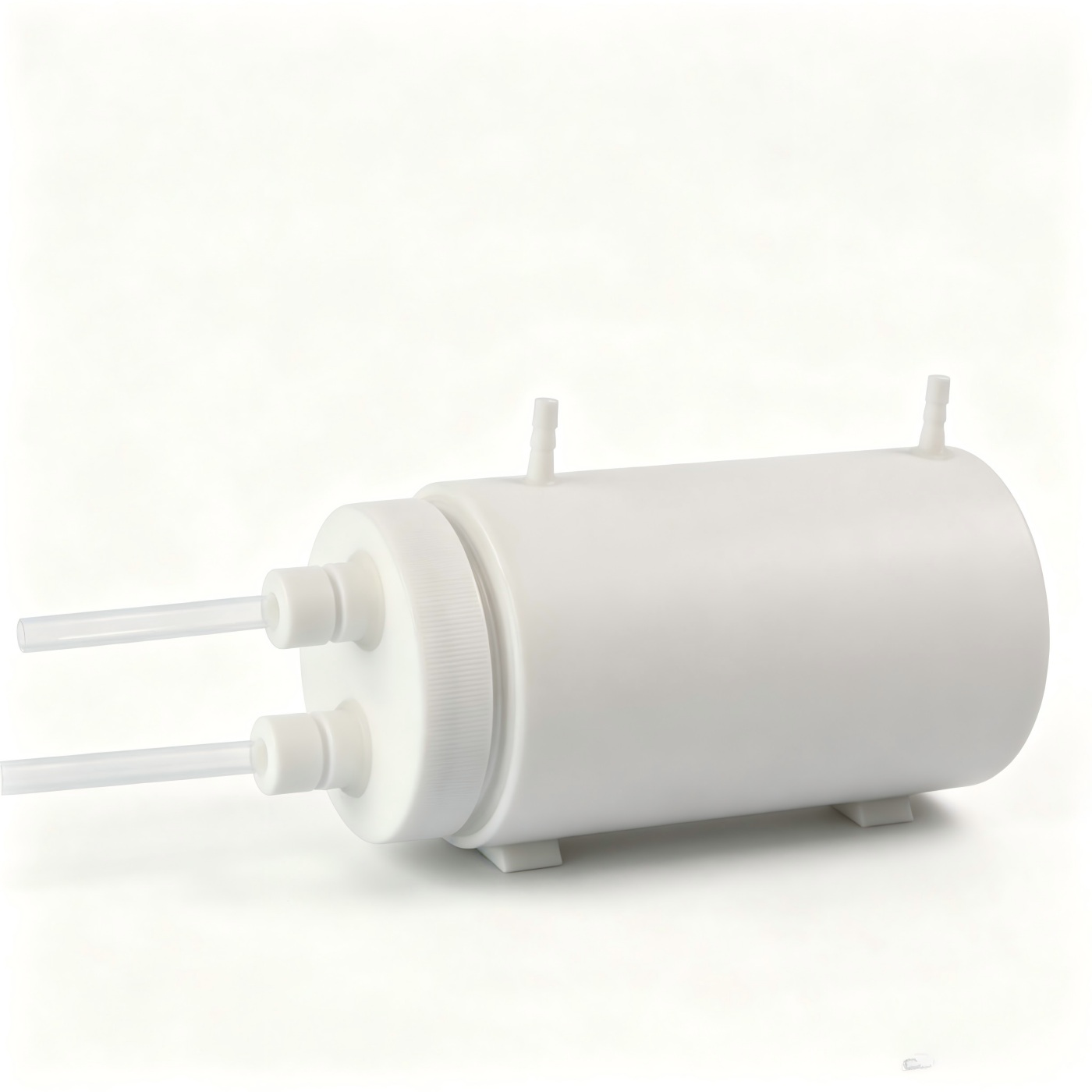
PTFE Gas Reaction Bottle for Hydrometallurgy Laboratory Leaching Experiments |

The PTFE Gas Reaction Bottle is a corrosion-resistant reaction vessel designed for hydrometallurgical laboratory applications. Manufactured from high-performance PTFE material, it provides excellent chemical inertness and structural stability for demanding gas-liquid reaction systems, ore leaching experiments and fluorination system tests in mining and metallurgical laboratories.
With reliable resistance to corrosive chemical environments and stable reaction conditions, this reaction bottle helps minimize sample contamination and supports repeatable experimental results. It is suitable for standardized mineral sample preparation, metallurgical testing and hydrometallurgical research workflows requiring durable laboratory reaction equipment.
Designed for professional hydrometallurgy and mineral processing laboratories, the PTFE Gas Reaction Bottle supports various experimental procedures related to mineral conversion, chemical reaction evaluation and metallurgical process research.
Gas-Liquid Reaction Experiments: Suitable for laboratory gas-liquid reaction systems involving mineral processing and chemical conversion studies, providing a stable reaction environment during experimental procedures.
Ore Leaching Experiments: Applied in conventional mineral leaching tests for evaluating mineral behavior and supporting hydrometallurgical process research under controlled laboratory conditions.
Fluorination System Experiments: Designed for specialized fluorination-related experimental processes where strong corrosion resistance and chemical stability are required.
Mining and Metallurgical Research Laboratories: Suitable for mine enterprise laboratories, hydrometallurgical research institutions and third-party mineral analysis facilities requiring reliable reaction vessels.
Manufactured from premium PTFE material, the reaction bottle provides strong resistance against corrosive media including fluorine-based reagents. It reduces vessel erosion and impurity precipitation during leaching and fluorination experiments, helping maintain clean reaction environments for reliable mineral and metallurgical testing.
The optimized structural design supports stable gas-liquid reaction processes and maintains consistent experimental conditions throughout reaction cycles. This improves testing repeatability and reduces experimental variation caused by vessel instability.
Professionally designed for laboratory leaching, gas reaction and fluorination experiment procedures, this PTFE reaction vessel integrates into existing mineral sample preparation and metallurgical testing workflows without additional process adjustments.
The robust PTFE structure provides excellent aging resistance and long-term chemical durability under continuous laboratory use. Compared with ordinary glass vessels, it helps reduce replacement frequency and maintenance requirements during repeated experimental operations.
| Product Category | Hydrometallurgical Reaction Equipment |
| Main Material | PTFE |
| Core Applicable Scenarios | Gas-liquid reaction experiments, ore leaching experiments, fluorination system experiments |
| Core Advantages | Corrosion resistance, chemical inertness, stable reaction environment, low contamination |
FKN PANDA specializes in providing corrosion-resistant laboratory reaction equipment for global mining and hydrometallurgy laboratories. Our PTFE Gas Reaction Bottles are designed to address common challenges in metallurgical experiments, including corrosion risks, contamination concerns and unstable reaction conditions.
With durable PTFE construction and reliable chemical stability, these reaction vessels support long-term leaching experiments, gas-liquid reaction studies and fluorination system testing while improving experimental repeatability and laboratory workflow efficiency.
FKN PANDA provides standardized laboratory equipment solutions and stable supply support for mining companies, research institutions and laboratory distributors worldwide, helping professional users achieve reliable hydrometallurgical testing performance.
Q1. How to select a PTFE gas reaction vessel for gas-solid reactions in mining laboratory applications?
Selecting a PTFE gas reaction vessel requires consideration of the reaction type, sample characteristics, gas compatibility, operating conditions, and laboratory workflow requirements. In mining and metallurgical research, gas-solid reactions may be used for mineral treatment studies, reaction mechanism evaluation, or process development experiments. Laboratories should evaluate vessel volume, material compatibility, sealing requirements, and integration with gas supply systems. Proper selection helps ensure reliable experimental control during the stages from mineral sample preparation to metallurgical evaluation.
Q2. What factors should be considered when choosing PTFE gas reaction vessels for corrosive gas handling in mining laboratories?
When handling corrosive gases in mining laboratories, vessel selection should focus on chemical compatibility, sealing performance, temperature conditions, and operational safety requirements. PTFE materials are commonly considered for applications involving aggressive chemical environments due to their resistance characteristics. Laboratory managers should also evaluate gas inlet and outlet configurations, cleaning procedures, and compatibility with supporting equipment to maintain stable operation during mineral processing research and gas reaction experiments.
Q3. How does PTFE material improve chemical resistance compared with glass reactors in gas phase mineral processing?
PTFE materials are widely used in laboratory applications where chemical resistance is an important consideration. Compared with traditional glass reaction containers, PTFE vessels may provide advantages in certain corrosive gas and chemical environments due to their material properties. For mining laboratory applications, this can support experimental work involving reactive gases, mineral concentrates, and metallurgical evaluation processes. The final selection should be based on specific reaction chemistry, temperature requirements, and laboratory operating procedures.
Q4. How to optimize PTFE gas reaction vessel volume for small scale gas-solid kinetic studies on ore samples?
Choosing the appropriate vessel volume is important for controlling gas-solid reaction conditions and obtaining meaningful experimental results. Laboratories should consider sample quantity, gas requirements, reaction duration, measurement methods, and available laboratory equipment when selecting PTFE gas reaction vessel capacity. For small-scale mineral research, suitable vessel configuration can help maintain consistent reaction conditions and support kinetic studies used in metallurgical testing and process evaluation.
Q5. What are the differences between PTFE and PFA gas reaction vessels for high temperature mineral reaction applications?
PTFE and PFA materials are both fluoropolymer options used in demanding laboratory environments, but their properties and application suitability may differ depending on operating conditions. When selecting a gas reaction vessel, laboratories should evaluate temperature requirements, chemical exposure, mechanical requirements, and compatibility with the intended reaction process. For mining and metallurgical applications, understanding these differences helps researchers select suitable equipment for controlled gas treatment experiments and laboratory-scale process investigations.
Q6. How can laboratories ensure testing repeatability when using PTFE gas reaction vessels for multi-sample gas treatments?
Repeatability in gas reaction experiments depends on consistent sample preparation, controlled gas conditions, stable operating procedures, and proper equipment maintenance. When using PTFE gas reaction vessels for multiple mineral samples, laboratories should standardize vessel cleaning, sample loading methods, gas flow procedures, and reaction monitoring processes. These practices help reduce experimental variation and support reliable comparison of results during mineral processing research and metallurgical evaluation programs.
Q7. What maintenance requirements are typical for PTFE gas reaction vessels in continuous laboratory operation?
Routine maintenance of PTFE gas reaction vessels generally focuses on cleanliness, sealing condition, connection inspection, and proper handling procedures. In continuous mining laboratory operations, vessels may be exposed to different gases and chemical environments, making appropriate cleaning and inspection important. Laboratories should establish maintenance procedures based on actual application conditions to support long-term operational reliability and consistent performance during repeated gas-solid reaction experiments.
Q8. How do PTFE gas reaction vessels reduce contamination risks in mineral research experiments?
Contamination control is important in mineral research, especially when experiments involve trace components or sensitive analytical measurements. PTFE gas reaction vessels can support contamination-sensitive workflows through their chemical resistance characteristics and suitability for aggressive laboratory environments. Combined with proper sample preparation, cleaning procedures, and controlled experimental practices, they help laboratories maintain more consistent conditions during gas treatment studies, mineral analysis, and metallurgical process evaluation.
Q9. Can PTFE gas reaction vessels be integrated with gas flow control systems in mining laboratories?
PTFE gas reaction vessels can be considered for integration with gas flow control systems when the vessel configuration is compatible with the laboratory setup and experimental requirements. Mining laboratories conducting controlled gas treatment studies should evaluate connection design, gas supply requirements, monitoring methods, and operational procedures before implementation. Proper integration supports controlled experimentation and improves workflow organization during laboratory-scale mineral processing and metallurgical research.
Q10. What factors influence PTFE gas reaction vessel selection for advanced metallurgical testing and process research?
Selection of a PTFE gas reaction vessel for advanced metallurgical testing should consider reaction chemistry, sample type, gas environment, temperature conditions, vessel configuration, and research objectives. Applications such as mineral concentrate treatment, gas-solid reaction studies, and process evaluation may require different experimental approaches. By matching vessel characteristics with laboratory requirements, researchers can establish suitable testing procedures that support mineral evaluation, metallurgical development, and future process decision-making.
Contact Information
E-mail:
Tel:
Address : Room 2512, Unit 1, Huaqiao Square, No.1, Daqiao North Road, Jiangbei New District, Nanjing, China
Veterinary Equipment
Medical Equipment

 There is currently no content to display


