


Category
|
Order Code |
Product Name |
|
H-01-01-M05 |
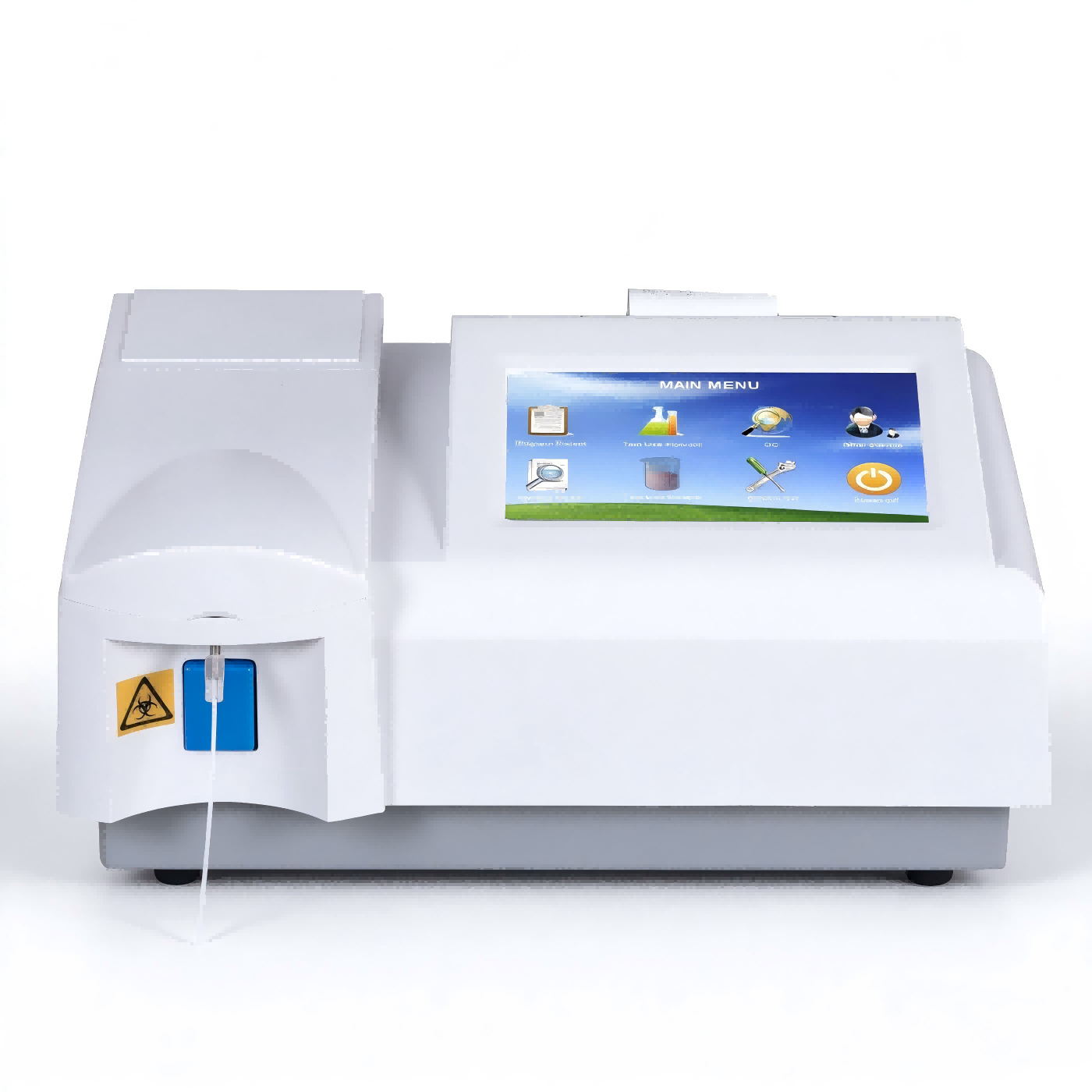
Compact Semi-Automatic Clinical Chemistry Analyzer | FKNMED |

The Compact Semi-Automatic Clinical Chemistry Analyzer is designed for routine clinical chemistry testing in hospital laboratories, clinical laboratories, diagnostic centers and medical testing facilities. Operating in semi-automatic mode, the analyzer supports end-point and absorbance measurement modes for biochemical testing workflows.
With its compact design and semi-automatic operation, this clinical chemistry analyzer is suitable for professional laboratory environments requiring equipment for routine biochemical testing. It is intended for use by medical laboratory professionals in clinical chemistry testing applications.
The Compact Semi-Automatic Clinical Chemistry Analyzer is designed for clinical chemistry testing in professional medical laboratory environments, including:
Hospital Laboratories
Clinical Laboratories
Diagnostic Centers
Medical Testing Laboratories
Medical Laboratory Departments
This analyzer is also relevant to medical equipment distributors, importers and wholesalers supplying clinical chemistry testing equipment to hospitals, laboratories and diagnostic facilities.
The analyzer operates in semi-automatic mode and is designed to support routine clinical chemistry testing workflows in hospital and clinical laboratories.
The instrument supports end-point and absorbance measurement modes for clinical chemistry testing. These measurement modes allow laboratory professionals to conduct biochemical testing procedures according to the applicable test methods.
Its compact design makes the analyzer suitable for medical laboratory environments where equipment space and routine biochemical testing requirements are important considerations.
The analyzer is intended for routine clinical chemistry testing in hospital laboratories, clinical laboratories, diagnostic centers and medical testing facilities.
| Item | Specification |
|---|---|
| Product Name | Compact Clinical Chemistry Analyzer |
| Operation Mode | Semi-Automatic |
| Measurement Modes | End-Point and Absorbance |
| Application | Clinical Chemistry Testing |
| Target Settings | Hospital Laboratories, Clinical Laboratories, Diagnostic Centers and Medical Testing Facilities |
FKNMED supplies medical equipment for international healthcare markets, serving medical equipment importers, distributors, wholesalers and institutional procurement customers.
For buyers sourcing clinical chemistry analyzers and medical laboratory equipment, FKNMED provides a product-focused supply channel for evaluating equipment options according to their laboratory application requirements.
Medical equipment distributors, importers and procurement organizations can contact FKNMED for further product information and sourcing discussions.
Q1. What factors should laboratories consider when selecting a compact clinical chemistry analyzer?
Laboratories should evaluate the analyzer according to their routine testing requirements, available bench space, expected daily sample volume, test menu, measurement methods, and operational workflow. For a compact clinical chemistry analyzer, physical dimensions are important, but they should not be the only selection criteria. Buyers should also review analytical performance specifications, supported assay types, sample and reagent requirements, calibration procedures, quality-control functions, and maintenance requirements. Compatibility with the laboratory's existing reagents and testing protocols should be confirmed before procurement. Hospitals and diagnostic centers should also consider operator training, technical support, consumable availability, and the long-term cost of routine operation.
Q2. Is a compact clinical chemistry analyzer suitable for hospital laboratories with limited bench space?
A compact clinical chemistry analyzer may be suitable for hospital laboratories, outpatient diagnostic centers, and smaller testing facilities where bench space is limited. Its suitability depends on the analyzer's actual dimensions, required operating clearance, ventilation requirements, power supply, and the space needed for sample preparation and reagent handling. Laboratories should assess the complete workstation rather than considering the instrument footprint alone. Sufficient space must remain for consumables, sample racks, waste containers, and routine cleaning activities where applicable. Before installation, laboratory managers should confirm the manufacturer's environmental and placement requirements to ensure that the selected location supports safe and consistent operation.
Q3. What laboratory applications can a compact clinical chemistry analyzer support?
A compact clinical chemistry analyzer is intended for quantitative or qualitative clinical chemistry testing, depending on its validated functions and supported assay menu. Potential applications may include routine biochemical testing in hospital laboratories, outpatient diagnostic centers, and other clinical testing facilities. However, the specific assays, specimen types, measurement principles, and reportable ranges must be confirmed from the manufacturer's technical documentation. Laboratories should compare the available test menu with their routine diagnostic requirements before purchasing the instrument. They should also verify reagent compatibility, calibration requirements, and applicable quality-control procedures for each assay. Do not assume that every clinical chemistry parameter is supported by every analyzer.
Q4. What is the difference between a semi-automatic and a fully automatic clinical chemistry analyzer?
A semi-automatic clinical chemistry analyzer generally requires laboratory personnel to perform certain testing steps, such as sample and reagent preparation or loading, according to the instrument's operating procedure. A fully automatic system typically automates a greater proportion of sample processing and analytical operations. The appropriate option depends on daily sample volume, staffing, available laboratory space, test menu requirements, and budget. Semi-automatic systems may be considered by smaller laboratories or facilities with moderate routine workloads, provided their operational requirements are suitable. Procurement teams should compare throughput, operator involvement, analytical performance, maintenance needs, and total operating costs rather than selecting equipment based on automation level alone.
Q5. Can a clinical chemistry analyzer perform end-point and absorbance-based measurements?
End-point and absorbance-based measurements are used in clinical chemistry methods, but the available measurement modes depend on the analyzer's design and validated configuration. Before purchasing a compact clinical chemistry analyzer, laboratories should confirm which photometric or other measurement principles the instrument supports and whether these are compatible with their intended assays. They should also review the applicable wavelength settings, measurement range, reaction conditions, and reagent instructions where these specifications are provided. The term "absorbance measurement" does not by itself establish that an instrument supports every end-point or kinetic assay. Laboratories should verify each intended application against the manufacturer's technical documentation and assay requirements.
Q6. What sample preparation procedures are required before clinical chemistry analysis?
Sample preparation depends on the specimen type, target analyte, assay method, and reagent instructions. For many routine clinical chemistry tests, laboratories use appropriately collected and processed serum or plasma, although the accepted specimen types must be verified for each assay. Pre-analytical procedures may include correct patient identification, suitable collection tubes, proper sample separation, inspection for hemolysis or lipemia where relevant, and appropriate storage before testing. Laboratories should follow validated procedures for specimen handling, centrifugation, and sample preparation. Incorrect collection, delayed processing, contamination, or unsuitable storage conditions can affect analytical results. The analyzer's instructions and the relevant assay documentation should take priority over general preparation practices.
Q7. Which quality-control practices help maintain reliable clinical chemistry results?
Reliable clinical chemistry testing requires a documented quality-management process that includes appropriate internal quality control, calibration verification where applicable, equipment maintenance, and review of analytical performance. Laboratories should establish quality-control procedures for each assay according to the manufacturer's instructions, the laboratory's risk assessment, and applicable regulatory or accreditation requirements. Control materials should be selected and used according to their intended purpose and compatibility with the measurement system. Staff should review control results against established acceptance criteria before releasing patient results. Unexpected control failures should trigger documented investigation and corrective action. External quality assessment or proficiency testing can provide additional information about the laboratory's testing performance.
Q8. How should laboratories manage calibration and maintenance of a semi-automatic chemistry analyzer?
Calibration and maintenance schedules should follow the manufacturer's instructions and the requirements of the assays performed. Calibration may be required during initial setup, after specified maintenance activities, when reagent or calibration conditions change, or when quality-control results indicate a potential analytical problem. Laboratories should not apply an arbitrary fixed calibration interval without considering the instrument and assay documentation. Routine maintenance may include cleaning designated surfaces and components, checking relevant connections, inspecting the instrument for abnormal conditions, and completing any manufacturer-specified maintenance procedures. Each activity should be recorded with the date, operator, findings, and corrective actions where applicable. This documentation supports equipment traceability and maintenance management.
Q9. What technical specifications should procurement teams evaluate before purchasing a compact clinical chemistry analyzer?
Procurement teams should review the analyzer's measurement principles, supported assay menu, wavelength range where applicable, photometric performance, sample and reagent requirements, measuring range, accuracy and precision data, and operating capacity. Other important considerations include instrument dimensions, power requirements, environmental conditions, user interface, data management functions, calibration procedures, and quality-control capabilities. The availability of compatible reagents, calibrators, control materials, cuvettes, and other consumables should also be confirmed. Technical specifications should be assessed against the laboratory's actual workload and intended clinical applications. Buyers should request the manufacturer's official documentation and verify that performance claims and supported functions apply to the exact model and configuration being considered.
Q10. What should medical equipment distributors and importers evaluate when sourcing a compact clinical chemistry analyzer?
Distributors and importers should assess product documentation, model specifications, intended applications, supported assay methods, configuration options, and the availability of compatible reagents and consumables. They should also confirm applicable market registration requirements, electrical safety documentation, quality-system information, labeling requirements, and other regulatory documents required in their target markets. Commercial evaluation should include supply continuity, packaging, transportation requirements, warranty terms, spare-parts availability, technical support arrangements, and operator training resources. For semi-automatic systems, distributors should ensure that prospective customers understand the level of manual involvement required during routine testing. Clear technical documentation and verified product information help reduce procurement uncertainty and support responsible market introduction.
Contact Information
E-mail:
Tel:
Address : Room 2512, Unit 1, Huaqiao Square, No.1, Daqiao North Road, Jiangbei New District, Nanjing, China
Veterinary Equipment
Medical Equipment

 There is currently no content to display


